Welcome to the website of the Oomen lab!
We investigate how transposable elements (TEs) shape genome regulation, stability, and integrity, from an evolutionary perspective.
TEs are (formerly) mobile genetic sequences that comprise nearly half of the human genome. Long thought to be simply selfish elements without function to the host, they are now recognized as potential drivers of genomic innovation; co-opted to regulate gene expression, shape chromatin architecture, and (re-)wire developmental programs.
Our lab asks how and when this co-option happens, how TEs affect their host genome and epigenome, and what this means for development and disease when TEs become miswired.
Research themes
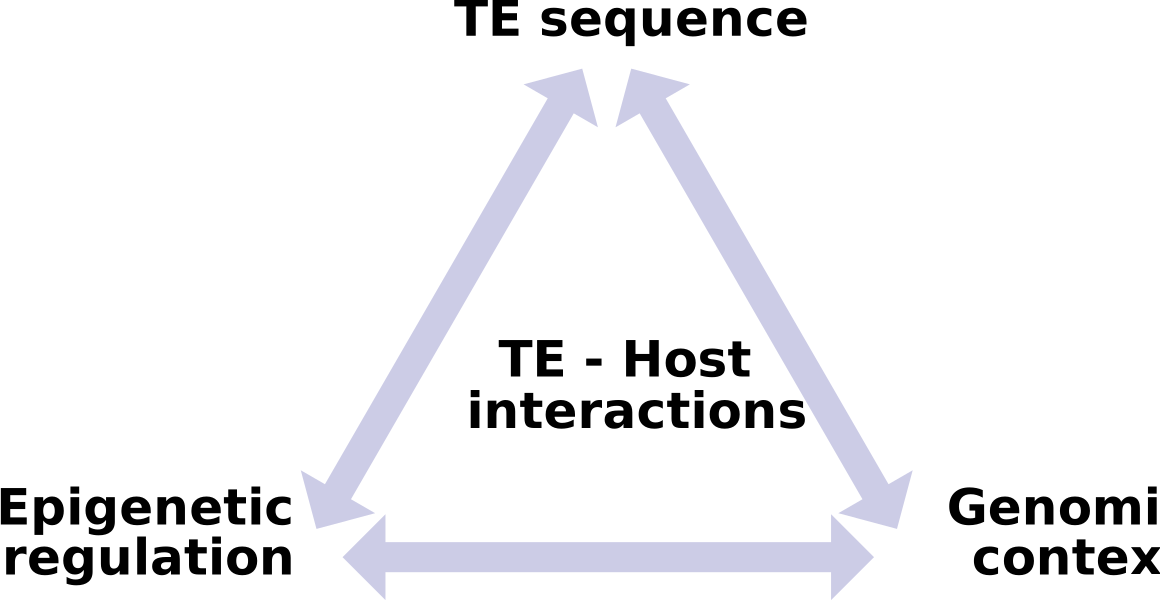
We combine computational approaches and wet-lab experiments in mammalian stem cell systems to answer three interconnected questions:
-
How and when do TEs become regulatory sequences? We trace TE evolutionary trajectories across mammalian genomes to understand how and when TE sequences switch from selfish elements to beneficial sequences for their hosts.
-
How are TEs controlled by the epigenome? Using mammalian stem cells and differentiation models, we study how the epigenome regulates and is regulated by TE sequences throughout development and differentiation.
-
How do TE insertions wire transcriptional programs? Due to their repetitive nature, TEs can affect entire sets of genes. We study how TE sequences may affect neighboring genes and how this can become miswired in disease.
Get in touch!
We are a new lab at UMass Chan Medical School. If you are excited about TEs and gene regulation, epigenetics, genome evolution or stem cell biology, we would love to hear from you.